Sources
- Peer-reviewed study (DOI: 10.1001/archinternmed.2010.205). study in Archives of Internal Medicine
- Peer-reviewed study (DOI: 10.1002/14651858.CD010223.pub3). Cochrane review
- Peer-reviewed study (DOI: 10.1089/thy.2001.11.1003). study published in Thyroid
- Peer-reviewed study (DOI: 10.1089/thy.2006.16.249). interferes with levothyroxine absorption
- Peer-reviewed study (DOI: 10.1089/thy.2006.16.763). reduce levothyroxine absorption by 20 to 50%
- Peer-reviewed study (DOI: 10.1089/thy.2007.0222). reduces levothyroxine absorption by 27 to 36%
- Peer-reviewed study (DOI: 10.1210/jc.2005-1504). study in the Journal of Clinical Endocrinology and Metabolism
- Peer-reviewed study (DOI: 10.1210/jc.2017-00651). falsely low TSH and falsely high T4 or T3
- Peer-reviewed study (DOI: 10.4158/EP12191.OR). study published in Endocrine Practice
- thyroid.org. American Thyroid Association
This article is for informational purposes only and does not replace medical advice. Consult your doctor or pharmacist before changing how you take your thyroid medication or supplements.
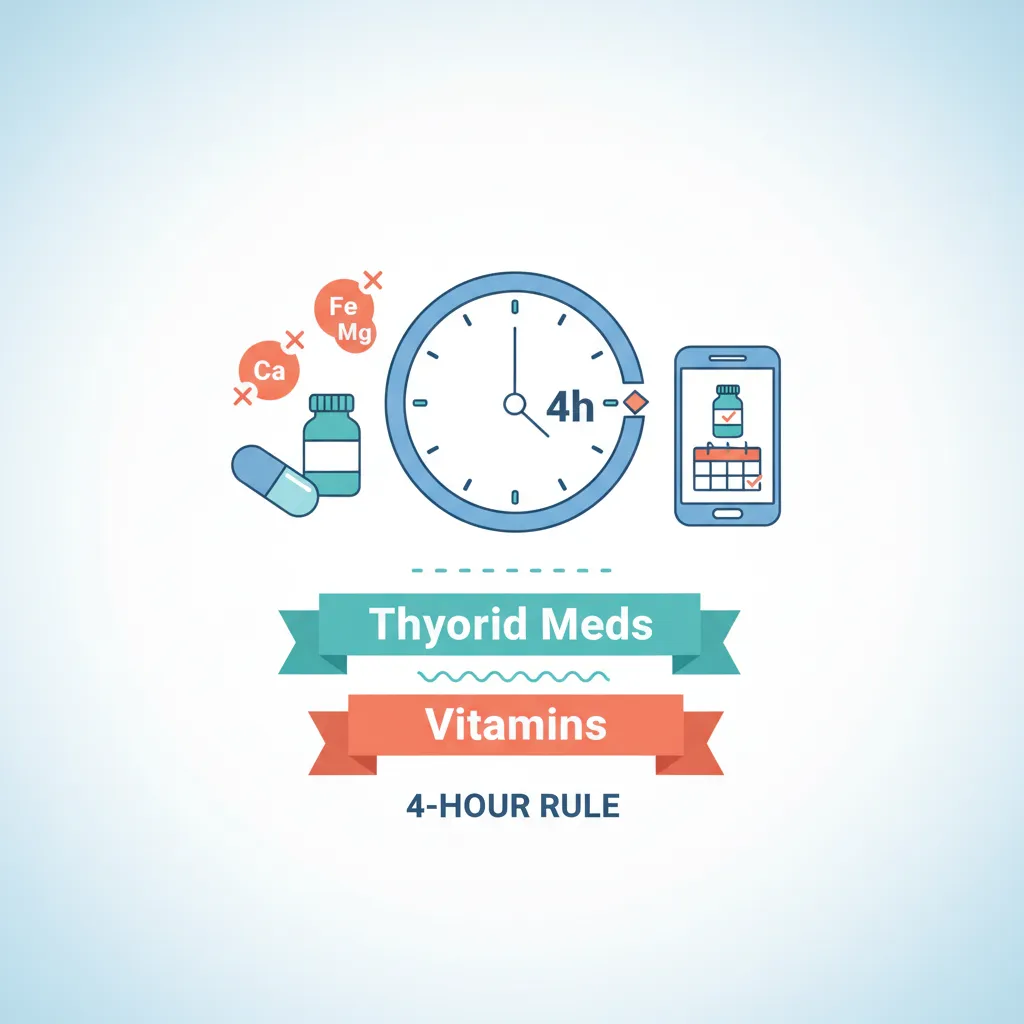
Calcium, iron, magnesium, and aluminum-containing antacids all block levothyroxine absorption and must be separated by at least 4 hours. Coffee and soy also reduce absorption. Biotin and zinc do not block absorption but can interfere with thyroid lab results or iron uptake. Levothyroxine is the most commonly prescribed medication in the United States and one of the most sensitive to supplement interactions. If you take a multivitamin with your thyroid pill in the morning, you may be getting a fraction of your prescribed dose without realizing it.
The 4-hour rule at a glance
| Supplement or food | Wait time from levothyroxine | Why |
|---|---|---|
| Calcium (Tums, citrate, carbonate) | 4 hours | Forms insoluble complex in the gut |
| Iron (ferrous sulfate, bisglycinate) | 4 hours | Tight chelate, ~33% absorption loss |
| Magnesium (all forms) | 4 hours | Binds in the gut |
| Aluminum antacids (Maalox, Mylanta) | 4 hours | Same binding mechanism as calcium |
| Soy (milk, protein, isoflavones) | 4 hours | Reduces absorption and affects thyroid function |
| High-fiber supplements (psyllium) | 2 to 4 hours | Traps medication in fiber matrix |
| Coffee (and milk) | 30 to 60 minutes | 27 to 36% absorption reduction |
| Biotin supplement | Not absorption-related (see TSH test section) | Interferes with lab assays, not the drug |
| Vitamin D, B vitamins, vitamin C, fish oil, CoQ10, probiotics | Safe together | No known interaction |
| Zinc | Safe with levothyroxine; separate from iron by 2 hours | No levothyroxine interaction; competes with iron absorption |
Why levothyroxine is so sensitive to supplements
Levothyroxine (brand names include Synthroid, Levoxyl, Tirosint) is a synthetic version of the T4 thyroid hormone. It has a narrow therapeutic window, meaning even small changes in how much your body absorbs can shift your thyroid levels from controlled to symptomatic.
The problem: several common minerals bind to levothyroxine in the gut, forming complexes your body cannot absorb. The medication passes through and is excreted without ever reaching your bloodstream. These interactions can reduce levothyroxine absorption by 20 to 50% depending on the supplement.
This is not a theoretical concern. Endocrinologists see it constantly. A patient's TSH levels are stable for months, then suddenly spike. The cause: they started a calcium supplement, switched to a different multivitamin, or began taking iron. Nothing wrong with the thyroid. The medication just stopped being absorbed properly. (If you recently missed a dose or took a double, see our guides on missed dose of levothyroxine and accidentally took double dose of levothyroxine.)
Supplements that block levothyroxine (4-hour rule)
These supplements form insoluble complexes with levothyroxine in the gut. You must separate them by at least 4 hours.
Calcium supplements
Calcium is the most common offender because so many people take it. A study in the Journal of Clinical Endocrinology and Metabolism showed that calcium carbonate reduced levothyroxine absorption significantly, even at standard supplement doses. This includes calcium carbonate (Tums), calcium citrate, and calcium in fortified foods and beverages.
If you take a multivitamin, check the label. Most multivitamins contain 200 to 500 mg of calcium, enough to interfere with levothyroxine.
Iron supplements
Iron is equally problematic. A study published in Thyroid demonstrated that ferrous sulfate reduced levothyroxine absorption by approximately 33% when taken simultaneously. Iron forms a tight chelate with levothyroxine that resists absorption.
This creates a scheduling headache because both levothyroxine and iron absorb best on an empty stomach. See our guide on iron supplement timing for strategies on fitting both into your day.
Magnesium supplements
Magnesium hydroxide (milk of magnesia), magnesium citrate, and magnesium oxide all reduce levothyroxine absorption. The mechanism is similar to calcium: magnesium binds to the medication in the gut. Magnesium glycinate may interfere slightly less, but the 4-hour spacing rule still applies to all forms. For more on magnesium timing, see best time to take magnesium.
Aluminum-containing antacids
Not a vitamin, but worth including because antacids are so commonly used alongside supplements. Aluminum binds to levothyroxine the same way calcium and iron do. Separate by 4 hours.
Supplements and foods that reduce absorption (1 to 4 hour rule)
These do not bind to levothyroxine directly but still reduce how much you absorb.
Coffee
Coffee reduces levothyroxine absorption by 27 to 36% when consumed at the same time. The effect is from the coffee itself, not just caffeine. A study published in Thyroid showed significant absorption differences between patients who took levothyroxine with water versus with coffee.
The fix is simple: take levothyroxine with a full glass of water, then wait at least 30 to 60 minutes before your first cup of coffee. See our full guide on medication and coffee timing.
Soy products and supplements
Soy interferes with levothyroxine absorption and may also affect thyroid function directly. Soy-based protein shakes, soy milk, soy isoflavone supplements, and tofu should be separated from levothyroxine by at least 4 hours.
High-fiber supplements
Fiber supplements like psyllium, methylcellulose, and glucomannan can trap levothyroxine and reduce absorption. Separate by at least 2 to 4 hours. A high-fiber breakfast (bran cereal, oatmeal) can have a similar effect if eaten too close to your thyroid medication.
Biotin and thyroid tests: a separate problem
Biotin (vitamin B7) does not reduce levothyroxine absorption. It interferes with a different thing: your blood tests.
Many TSH, free T4, and free T3 lab assays use a biotin-streptavidin binding system. Supplemental biotin can throw off those assays, producing falsely low TSH and falsely high T4 or T3. Your thyroid may actually be on target, but the lab result suggests you are overdosed. That can lead to unnecessary dose reductions.
The American Thyroid Association recommends stopping biotin for at least 2 to 3 days before a thyroid blood draw for most supplement doses. If you take high-dose biotin (5,000 to 10,000 mcg, common in hair and nail products), aim for 3 days. For very high doses (100,000 mcg or more, used in some neurological conditions), confirm the washout period directly with your lab.
Biotin does not need a 4-hour window from levothyroxine. You can take it with your thyroid medication. Just hold it before lab work.
Does zinc interfere with levothyroxine?
Zinc plays a role in thyroid hormone conversion from T4 to T3. It does not block levothyroxine absorption and does not need 4-hour spacing from your thyroid dose.
Zinc does compete with iron for absorption, so if you take both, separate them by at least 2 hours. For most people this happens naturally: iron in the morning on an empty stomach, zinc with dinner.
Evidence on zinc supplementation for thyroid function is limited and mixed. If your zinc intake from food is adequate, routine supplementation is not necessary. If you are supplementing for another reason, timing is simple: no conflict with levothyroxine.
Is vitamin D safe with levothyroxine?
Vitamin D does not interfere with levothyroxine absorption at any dose. You can take vitamin D at the same time as your thyroid medication, with breakfast, or at any other time.
Vitamin D deficiency is common in people with hypothyroidism and autoimmune thyroid disease. Your doctor may recommend supplementation based on a 25-hydroxyvitamin D blood level. See can you take too much vitamin D for upper-limit guidance.
Vitamins that are safe with levothyroxine
Not everything interferes. These supplements are generally safe to take without strict spacing:
| Supplement | Notes |
|---|---|
| Vitamin D | No interaction with levothyroxine. Important for thyroid patients since deficiency is common. |
| B vitamins (B12, B6, folate) | No absorption interference. Fine with breakfast. |
| Omega-3 / fish oil | No interaction. Take with food for best absorption. |
| Vitamin C | No interaction. May help iron absorption if taken with iron later in the day. |
| Probiotics | No known interaction. |
| CoQ10 | No known interaction with levothyroxine. |
| Zinc | Safe with levothyroxine. Separate from iron by 2 hours. |
Even though these are safe with levothyroxine, always double-check the full list of what you are taking with your pharmacist. Pillo handles the tricky part: a persistent empty-stomach alarm for your levothyroxine and separate timers for supplements that need a 4-hour gap.
The 4-hour rule in practice: sample schedules
The biggest practical challenge for thyroid patients is fitting levothyroxine into a day that also includes supplements. Here are two schedules that work.
Schedule A: early riser
| Time | What to take | Notes |
|---|---|---|
| 6:00 AM (empty stomach) | Levothyroxine + water | Nothing else. No food, no coffee, no supplements. |
| 7:00 AM | Coffee + breakfast | Safe 60+ minutes after levothyroxine. |
| 7:00 AM (with breakfast) | Vitamin D, B vitamins, fish oil | These do not interfere. Take with food. |
| 10:00 AM or later | Iron (if taking it) | 4+ hours after levothyroxine. Empty stomach + vitamin C. |
| 8:00 PM (dinner or bedtime) | Calcium, magnesium, zinc | 4+ hours from any other interfering meds. Keep zinc 2 hours from iron. |
Schedule B: no morning window
If you cannot take levothyroxine first thing (shift work, early feeding schedule, etc.), a bedtime option works. A study in Archives of Internal Medicine found that levothyroxine taken at bedtime (at least 4 hours after the last meal) was actually absorbed better than morning dosing for some patients.
| Time | What to take | Notes |
|---|---|---|
| 7:00 AM (breakfast) | All morning supplements (vitamin D, B vitamins, fish oil) | No thyroid med in the morning. |
| 8:00 AM (empty stomach) | Iron + vitamin C | If needed. |
| 12:00 PM (lunch) | Calcium, magnesium, zinc | Take with food. |
| 10:00 PM (bedtime, 4+ hours after dinner) | Levothyroxine + water | Empty stomach required. No food for 4 hours prior. |
See our detailed guide on best time to take levothyroxine for more schedule variations and tips.
The multivitamin trap
This is the single most common mistake thyroid patients make with supplements.
You take levothyroxine at 7 AM. You take your multivitamin at 7 AM. Your multivitamin contains calcium (300 mg), iron (18 mg), and magnesium (100 mg). Each of those minerals binds to levothyroxine in the gut and gets excreted without being absorbed.
Your TSH slowly rises over weeks. Your doctor asks about dose changes. The problem is not your thyroid. The problem is your multivitamin schedule.
The fix: Move your multivitamin to lunch or dinner, at least 4 hours after levothyroxine. Or switch to individual supplements you can time precisely. Pillo keeps the two alarms separate: one persistent alarm at 6 AM for levothyroxine, another at noon for supplements. Neither gets skipped because the alarm repeats until you confirm.
Thyroid-supportive supplements (worth knowing)
Some supplements are marketed specifically for "thyroid support." A few notes:
- Selenium: Some evidence supports selenium for autoimmune thyroid conditions (Hashimoto's). A Cochrane review found mixed results. Does not interfere with levothyroxine absorption.
- Iodine: Only helpful if you are iodine-deficient, which is uncommon in the US due to iodized salt. Excess iodine can worsen thyroid conditions. Do not supplement without testing.
- Ashwagandha: Popular adaptogen. Limited evidence for thyroid outcomes. Talk to your provider before starting if you have hyperthyroidism or autoimmune thyroid disease.
FAQ
Can I take my multivitamin with levothyroxine?
No, not if your multivitamin contains calcium, iron, or magnesium (most do). Take levothyroxine first thing in the morning on an empty stomach, and move your multivitamin to at least 4 hours later. Lunch is the easiest option for most people.
How long after levothyroxine can I take calcium?
Wait at least 4 hours. Calcium forms an insoluble complex with levothyroxine in the gut, dramatically reducing absorption. This applies to calcium supplements, calcium-fortified orange juice, dairy products, and antacids like Tums. See medication and milk interactions for more detail.
Does vitamin D interfere with thyroid medication?
No. Vitamin D does not affect levothyroxine absorption. You can take vitamin D at the same time as your thyroid medication or at any other time. Many thyroid patients are vitamin D deficient, so supplementation is often recommended. See can you take too much vitamin D for dosing guidance.
How long should I stop biotin before a TSH test?
Stop biotin for at least 2 to 3 days before a thyroid blood draw (TSH, free T4, free T3). For high-dose biotin in hair or nail supplements (5,000 to 10,000 mcg), aim for 3 days. For very high therapeutic doses (100,000 mcg or more, sometimes used in neurological conditions), confirm the washout window directly with your lab. Biotin does not interfere with levothyroxine itself, only with the lab assay.
Does zinc interfere with thyroid medication?
No. Zinc does not block levothyroxine absorption and does not require 4-hour spacing from your thyroid dose. Zinc does compete with iron for absorption, so if you take both supplements, separate them by at least 2 hours.
Can I take magnesium glycinate with levothyroxine?
Magnesium glycinate is gentler on the stomach than other forms, but it still binds to levothyroxine and reduces absorption. Separate all forms of magnesium from levothyroxine by at least 4 hours. Most people take magnesium at bedtime and levothyroxine first thing in the morning, which provides plenty of spacing.
What if I accidentally took my supplements with levothyroxine?
Do not take a second dose of levothyroxine. One day of reduced absorption will not cause a crisis. Resume your correct timing schedule the next day. If this has been happening regularly over weeks or months, tell your doctor. Your TSH may need to be rechecked and your levothyroxine dose may need reviewing.
Is Tirosint less affected by food and supplements?
Tirosint is a liquid gel cap formulation of levothyroxine designed to be less sensitive to absorption interference. A study published in Endocrine Practice showed Tirosint maintained better absorption in the presence of coffee compared to standard levothyroxine tablets. However, the 4-hour spacing rule for calcium, iron, and magnesium still applies. Tirosint is more expensive and may not be covered by all insurance plans.
Related guides:
- Best time to take levothyroxine
- Missed dose of levothyroxine
- Accidentally took double dose of levothyroxine
- Iron supplement timing (and what to avoid taking with it)
- Supplements you should not take together
- What vitamins to take together
- Medication and coffee: how long to wait
- Medication and milk interactions
- Best time to take magnesium
This article is for informational purposes only. It is not medical advice. Consult your doctor or pharmacist before changing how you take your thyroid medication or supplements.
Reviewed under our Medical Review Policy.